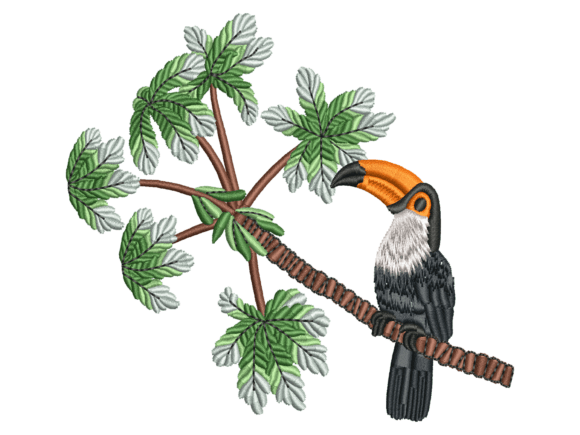
Toucan on Palm Tree Embroidery
A Vibrant, Tropical Statement — Not Just Another Bird Design
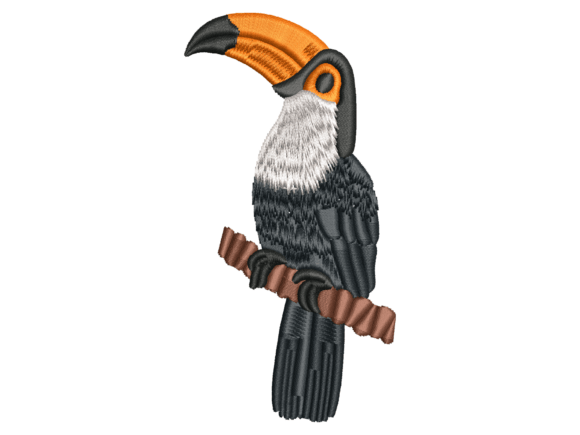
As an embroidery designer who’s stitched hundreds of bird motifs—from minimalist robins to hyper-detailed peacocks—I approached the Toucan on Palm Tree Embroidery with cautious optimism. Birds are tricky: too much detail risks thread breakage; too little feels generic. This design immediately stood out—not for flashiness, but for its confident rhythm. The toucan’s bold beak anchors the composition, while the palm fronds curve with organic flow, not rigid symmetry. It reads as joyful and grounded—tropical without tipping into kitsch. That balance matters when you’re building a cohesive line of handmade products or curating a boutique collection.
Fits Naturally Into Real-World Projects
I tested Toucan on Palm Tree Embroidery across six product types I regularly produce for clients and my own Etsy shop: cotton tote bags, midweight sweatshirts, linen kitchen towels, baby blanket corners, structured cap fronts, and embroidered patches. It performed strongest on stable, medium-weight fabrics—especially where the design’s layered textures could shine. On a natural linen towel, the fill stitch in the palm trunk held crisp definition; on a brushed cotton sweatshirt, the satin stitch beak retained rich dimension without puckering. It also translated beautifully into a printable mockup for social media—clean lines and strong contrast made it instantly recognizable at thumbnail size, which boosts engagement for Etsy listings or Instagram ads.
Where It Excels (and Where to Pause)
- Custom apparel: Works well on crewnecks and raglans—but avoid ultra-stretchy performance knits unless you add cutaway stabilizer and reduce stitch density manually. The curved frond tips can shift on high-recovery fabric.
- Tote bag design & pillow covers: Ideal scale and visual weight. No hooping drama—even in a 4x4 hoop, the design retains character without feeling cramped.
- Baby items & nursery decor: Soft color potential (think mint, coral, oatmeal) makes it gentle enough for gender-neutral baby blankets or wall hangings. Just confirm thread colors are OEKO-TEX® certified if selling to parents.
- Embroidered patch: Excellent candidate for heat-seal or sew-on patches. The outer edge is cleanly digitized—no stray running stitch tails—and the fill areas aren’t overly dense, so it lies flat after backing.
- Caps & curved surfaces: Requires careful hooping and basting. The lower frond cluster sits close to the cap’s curve—test on a scrap first. A light tear-away stabilizer + adhesive spray combo helped maintain registration.
Practical Notes Every Designer Should Check Before Stitching
Digital embroidery files like Toucan on Palm Tree Embroidery are only as reliable as your prep work. Here’s what I verified before stitching my first client order:
- Test on scrap fabric that matches your final substrate—same weight, stretch, and finish. I caught minor tension issues on fleece-lined sweatshirts during this step.
- Review stitch density visually in your embroidery software. Areas like the toucan’s eye and inner beak detail use tighter satin stitch—fine for stable fabric, but may require reduced density on delicate weaves.
- Confirm hoop size compatibility. The design fits comfortably in a 5x7 hoop, but check the actual dimensions listed on the Creative Fabrica product page—some versions include alternate sizes.
- Compare light vs. dark fabric mockups. The design’s contrast relies partly on thread color choice. On black fabric, I swapped to metallic gold thread for the beak outline—it lifted the whole piece without needing redesign.
- Use proper stabilizer. For lightweight cottons or knits, I paired medium-weight cutaway with a light topping to prevent thread shine on satin stitch areas.
- Inspect small details post-stitch. The tiny highlights in the toucan’s eye and vein lines in the fronds stayed sharp—but always verify under good light before packaging.
- Confirm licensing terms on Creative Fabrica. Since this is a digital embroidery file intended for commercial embroidery, double-check whether the license permits finished product resale—especially for Etsy or craft fairs.
How It Elevates Your Handmade Product—and Your Brand
Toucan on Palm Tree Embroidery isn’t just decorative—it strengthens perception. Customers browsing handmade goods respond to intentional design language. This motif signals craftsmanship: the balanced negative space, thoughtful layering (fronds behind beak, not overlapping awkwardly), and rhythmic line work suggest experience—not a rushed clipart import. That builds buyer trust, especially for personalized gifts or custom apparel where customers invest time and money.
For Etsy sellers, it adds visual consistency across listings—a matching set of towel, apron, and pillow cover all featuring the same cohesive motif increases average order value. For boutique merchandise, it gives seasonal collections personality: pair it with neutral bases (cream canvas, heather grey knit) and let the design carry the story. And for craft fair vendors, it photographs exceptionally well—sharp edges and clear shapes pop in natural light, reducing retouching time for social posts.
Final Thought: A Reliable, Mood-Lifting Asset
The Toucan on Palm Tree Embroidery won’t replace every bird design in your library—but it fills a specific, valuable niche: cheerful yet refined, detailed yet production-friendly, versatile across categories without feeling overused. It works because it respects embroidery’s physical limits while maximizing its expressive strengths. If you’re sourcing design assets for commercial embroidery, handmade gifts, or curated shop collections, this is one of those rare machine embroidery designs that delivers on both aesthetic promise and real-world function. Just remember: review the file details, test deliberately, and let the design’s natural energy do the rest.