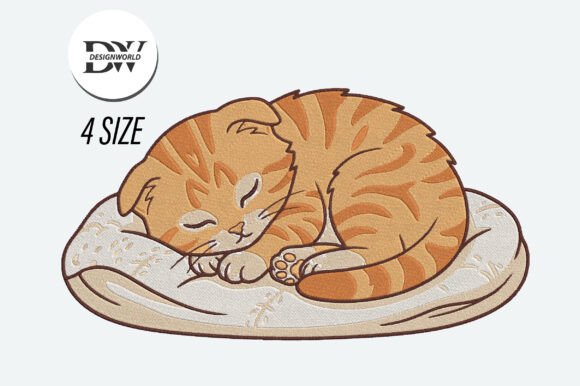
Sleeping Cat Embroidery Design
First Impression: Calm, Cohesive, and Craft-Ready
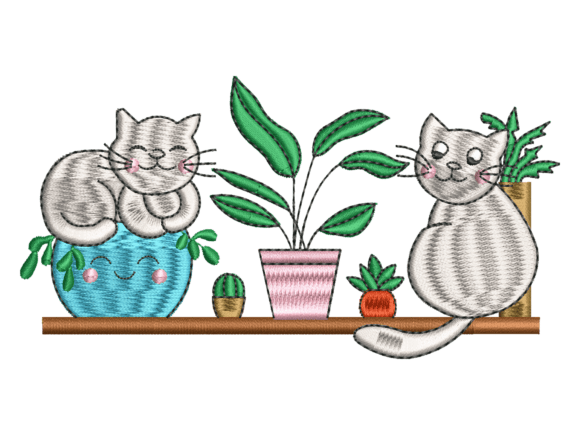
When I opened the Sleeping Cat Embroidery Design file, what struck me wasn’t just cuteness—it was intention. The sleeping feline is curled gently, limbs tucked, eyes softly closed, with subtle contour lines suggesting fur texture without overloading the stitch count. It’s not a cartoon; it’s a quiet, hand-drawn mood translated into machine embroidery language. The shape fits neatly within a medium hoop—no awkward stretching or trimming needed—and the negative space around the cat feels generous, not empty. That breathing room matters when you’re stitching on a curved surface like a tote bag handle or a baby onesie shoulder.
Real Project Test: A Linen Tea Towel for a Local Boutique
Last week, I used the Sleeping Cat Embroidery Design on a natural linen tea towel—part of a small-batch holiday collection for a neighborhood kitchen shop. I chose light gray thread on oat-colored linen, stabilized with medium-weight tear-away. The result? A finished product that looked handmade *without* looking fragile. Customers paused at the display—not because it shouted, but because it invited touch and quiet appreciation. That’s the strength of this design: it elevates everyday items through restraint, not busyness.
Where It Shines (and Why)
- Custom apparel: Works beautifully on sweatshirt cuffs, pocket corners, or chest placements—its compact scale avoids overwhelming heavier fabrics.
- Personalized gifts: Ideal for baby embroidery on burp cloths or pillow covers—soft expression matches the tenderness of early parenthood.
- Embroidered patch: Clean outer edge and balanced fill stitch density mean it cuts cleanly and holds up to iron-on or sewn application.
- Tote bag design: Stitches flat and lies smoothly even after repeated washing—no puckering at the ears or tail tip.
- Holiday embroidery: Paired with simple green or cream thread, it reads as cozy—not cutesy—making it timeless across seasons.
Where to Pause and Plan
This isn’t a one-size-fits-all embroidery file. Its gentle curves and soft edges demand thoughtful execution in certain contexts:
- Small hoop sizes (under 4”): The design will fit, but fine details—like the slight curve of the ear or whisker suggestion—may compress. Always test on scrap first.
- Textured fabrics (terry cloth, bouclé): Use cut-away stabilizer underneath to prevent stitch sinking. Fill stitch areas can disappear into pile if stabilization is light.
- Thin or stretchy fabric (rayon challis, lightweight knits): Hoop with stabilizer *and* topping—especially over the cat’s rounded back—to keep satin-stitch contours crisp.
- Dark fabric: Light thread colors read well, but avoid pale yellow or ivory unless you’re using high-contrast topping. Check your digital embroidery file preview in grayscale to confirm legibility.
- Curved surfaces (caps, beanies): The design’s symmetry helps—but avoid placing it too close to seams or brims where distortion occurs. Center it on the front panel for best results.
What It Adds to Your Finished Product—Beyond Aesthetics
As a designer who ships embroidered goods weekly, I notice how customers describe pieces that include the Sleeping Cat Embroidery Design: “so peaceful,” “feels like a hug,” “exactly the calm I needed.” That emotional resonance translates directly to perceived value. A $28 linen pillow cover becomes a keepsake. A $16 tote bag gains shelf presence in a boutique. For Etsy sellers and craft fair vendors, that’s not just charm—it’s conversion. The design supports brand consistency too: whether you use it on nursery decor or coffee shop aprons, it carries the same grounded warmth.
It also builds trust. Because the Sleeping Cat Embroidery Design avoids excessive detail or tight stitch clusters, it stitches reliably across home and commercial machines. Fewer thread breaks. Less re-hooping. Fewer customer photos showing skipped stitches or fuzzy edges. That reliability makes your handmade product feel professionally finished—even when you’re working solo in a spare-room studio.
Practical Designer Notes You’ll Actually Use
- Test the Sleeping Cat Embroidery Design on scrap fabric *in your actual project fabric*, not just cotton muslin.
- Check thread color contrast by stitching a 1” square swatch—what looks distinct on screen may blend on fabric.
- Review stitch density in your embroidery software. If fill areas feel heavy for your fabric weight, reduce density by 5–10% before final hooping.
- Confirm hoop size compatibility—some versions may be optimized for 5x7”, others for 4x4”. Don’t assume.
- Inspect small details: are whiskers implied with running stitch or omitted? Does the tail taper cleanly? These affect readability at small scales.
- Test black-and-white mockups—this design relies on shape and silhouette, so it must hold up without color cues.
- Compare performance on light vs. dark backgrounds. Adjust underlay or topping accordingly.
- Use proper stabilizer: tear-away for stable wovens, cut-away for knits, and topping for napped or textured surfaces.
- Verify licensing terms before listing finished items or bundling the digital embroidery file—commercial use rights aren’t automatic.
A Design That Supports Your Process—Not Just Your Product
The Sleeping Cat Embroidery Design doesn’t ask for perfection. It asks for attention—to fabric choice, stabilizer balance, and context. It rewards thoughtful execution with quiet impact. Whether you’re embroidering a single personalized gift or scaling up for a small shop product line, it behaves predictably and delivers consistently. That’s rare. And for makers who value both beauty and buildability, that’s exactly what makes it worth keeping in your active design assets folder—not just filed away as “cute.”