Bow Embroidery Design Bundle
First Impression: Sweet, Stylish, and Shelf-Ready
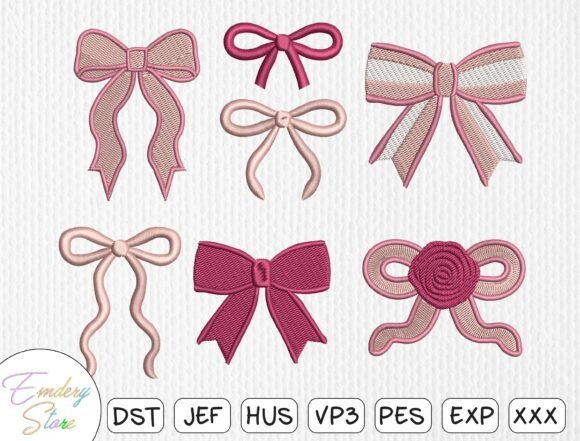
As an embroidery designer who’s prepped over 200 craft fair booths—and shipped thousands of handmade products—I opened the Bow Embroidery Design Bundle expecting charm. What I got was instant visual clarity: soft curves, balanced proportions, and a cohesive mood that lands somewhere between modern cottagecore and elevated accessory elegance. It doesn’t scream “festive” or “rustic”—it whispers “thoughtful detail.” That’s gold for accessories. Customers scanning your booth won’t pause for explanation; they’ll pause because it feels *intentional*, like something they’d gift or keep for themselves.
Where It Shines on Craft Fair Products
This bundle isn’t one-note—it’s versatile by design. On a natural linen tote bag? The outline bow adds subtle sophistication without overwhelming the fabric’s texture. On a denim apron? A satin-stitched bow at the chest pocket becomes a signature touch—clean, feminine, and instantly recognizable as handmade quality. For tea towel embroidery, smaller ribbon motifs work beautifully along hems or corners, offering rhythm without clutter. And on embroidered patches? These bows hold up remarkably well—even at 2.5” wide—thanks to smart spacing and minimal dense stitch areas.
Cap embroidery is trickier, but the simpler outline versions in the Bow Embroidery Design Bundle translate cleanly onto curved surfaces when hooped with medium-weight cutaway stabilizer. Pillow covers and small fabric pouches are where this set truly sings: centered bows anchor the composition, while varied styles (ribbon loop, double-loop, asymmetrical knot) let you curate a mini-collection—perfect for booth storytelling and cross-selling.
Real-World Production Notes Every Designer Needs
Before stitching your first batch, test the Bow Embroidery Design Bundle on scrap fabric that matches your production materials. Linen, cotton duck, and brushed twill all behave differently—and thread contrast shifts dramatically on dark fabric. A pale pink satin bow vanishes on navy unless you boost thread saturation or add a light underlay.
Check stitch density carefully. While the description mentions “filled satin stitch,” avoid assuming uniform density across all bow styles. Some may layer stitches tightly near knots—risking stiffness on lightweight fabrics or puckering on textured towels. Use tear-away stabilizer for smooth cottons, but switch to cutaway for knits or loosely woven market bags.
Hoop size matters more than you think. If your machine requires re-hooping mid-design, verify whether any bow elements span beyond standard 4×4 or 5×7 hoops. When in doubt, create a printable mockup first—this saves time, thread, and booth-ready inventory.
Photography, Listings, and Online Appeal
The Bow Embroidery Design Bundle photographs exceptionally well. Clean lines, defined edges, and intentional negative space make it ideal for Etsy listings and social previews. Unlike overly intricate motifs, these bows retain clarity even in thumbnail size—critical for scroll-heavy platforms. Pair them with neutral backdrops and natural lighting, and your finished product looks boutique-ready, not DIY-basic.
For digital sellers, this bundle functions as strong design assets: mix and match bow styles across product categories (tote bag design, apron embroidery, embroidered patch), reinforcing brand consistency without repetition. Buyers notice cohesion—and return for more.
What to Watch For in Small-Scale Applications
- Tiny details: Avoid scaling any bow below 1.2” wide—the ribbon tails and knot centers lose definition.
- Dense stitch areas: Filled satin bows require careful stabilizer selection on thick or napped fabrics (like terry cloth tea towels).
- Curved surfaces: Caps and pouches need precise hooping and reduced top tension to prevent thread breakage on tight curves.
- Fabric texture: Highly textured weaves can obscure fine outlines—opt for bolder versions or add a subtle running-stitch border for contrast.
Selling Power: Booth Impact and Buyer Engagement
In person, the Bow Embroidery Design Bundle performs like a quiet magnet. It doesn’t shout—but it invites touch, comparison, and conversation. At a craft fair, customers linger longest at displays where embroidery feels *designed*, not just applied. These bows communicate care: aligned curves, consistent stitch direction, and thoughtful placement (e.g., offset on a pouch flap or mirrored on pillow corners) elevate perceived value.
For small shop owners and Etsy sellers, this bundle supports scalable storytelling. One bow style becomes your “signature accent”—used across aprons, tea towels, and gift tags—building recognition without monotony. And because it works equally well as a small focal point or gentle background motif, it adapts to seasonal shifts: swap thread colors from sage green to cranberry red, and suddenly it’s holiday-ready.
Final Designer Checklist Before You Stitch
- Test the Bow Embroidery Design Bundle on your exact production fabric—not just muslin.
- Confirm thread colors complement your palette; mismatched pinks or muddy navies undercut handmade quality.
- Review spacing between bow elements—especially if combining multiple designs into one layout.
- Verify hoop size compatibility with your most-used machines and common product dimensions.
- Inspect stitch density visually—look for potential puckering or stiffness in satin-filled zones.
- Use appropriate stabilizer: cutaway for stretchy or unstable fabrics, tear-away for crisp cottons.
- Create at least one real mockup—not just a digital preview—to assess drape, texture, and wear.
- Compare how the bow reads on light vs. dark fabric swatches before committing to bulk production.
- Confirm commercial licensing terms if selling finished products—this is non-negotiable for Etsy sellers and boutique makers.
Bottom line? The Bow Embroidery Design Bundle isn’t just another embroidery file. It’s a reliable, repeatable, and quietly confident design asset—one that strengthens your booth display, deepens buyer trust, and turns everyday accessories into keepsakes. For craft fair sellers and handmade entrepreneurs, that’s not just practical. It’s profitable.